Reading a cannabis label can feel confusing at first. You may see THC percentage, total cannabinoids, CBD, serving size, batch numbers, package dates, terpene information, warnings, strain type, and product weight all in a small space. For new shoppers, it can be hard to know which details actually matter.
The good news is that once you understand the basics, cannabis labels become much easier to use. A label can help you compare products, understand potency, avoid taking too much, choose the right format, and ask better questions before you buy.
This guide explains how to read cannabis labels before shopping at ShowGrow Long Beach. Whether you are buying flower, vapes, pre-rolls, gummies, edibles, drinks, or wax, knowing how to read the label helps you make a smarter choice.
If you are brand new to dispensary shopping, start with our guide to visiting a Long Beach dispensary for the first time. If you are still learning product categories, you may also want to read our guides to indica vs. sativa vs. hybrid, beginner cannabis edibles, and buying cannabis flower in Long Beach.
Cannabis Label Terms at a Glance
Before getting into details, here are the most common cannabis label terms shoppers should understand.
| Label Term | What It Means | Why It Matters |
|---|---|---|
| THC | The main intoxicating cannabinoid in cannabis | Helps estimate potency and intensity |
| CBD | A non-intoxicating cannabinoid | Can affect how balanced a product feels |
| Total cannabinoids | The combined cannabinoid content | Gives a broader view than THC alone |
| Terpenes | Aromatic compounds found in cannabis | Influence aroma, flavor, and product personality |
| Serving size | The recommended amount per use | Especially important for gummies, edibles, and drinks |
| Total THC | The THC amount in the full package | Do not confuse this with THC per serving |
| Package date | When the product was packaged | Can help evaluate freshness |
| Batch number | A production tracking number | Connects the product to testing and manufacturing records |
| Net weight | The amount of product in the package | Helps compare grams, eighths, packs, and sizes |
Why Cannabis Labels Matter
Cannabis labels are not just packaging details. They help customers understand what they are buying. A label can tell you how strong a product may be, how much to take, how many servings are inside, what strain type it may be, whether it contains CBD, and how fresh it might be.
Labels are especially important because cannabis products can look similar but feel very different. Two gummies may come in similar packages but have different serving sizes. Two vape cartridges may look similar but use different oil types. Two flower eighths may both be hybrids but differ in THC, freshness, aroma, and terpene profile.
Reading the label helps you avoid guessing. It also helps you ask better questions at the counter.
The Most Important Label Details for Beginners
If you are new, you do not need to understand every technical detail right away. Start with the basics.
| Beginner Question | Label Detail to Check | Why It Helps |
|---|---|---|
| How strong is this? | THC per serving or THC percentage | Helps avoid buying something too intense |
| How much should I take? | Serving size | Especially important for edibles and drinks |
| Is this smoke-free? | Product type | Distinguishes gummies, drinks, vapes, flower, and pre-rolls |
| Is this relaxing or uplifting? | Indica, sativa, hybrid, and product description | Gives a general direction |
| Is this fresh? | Package date when available | Can help with flower and pre-roll shopping |
| Does this contain CBD? | CBD amount or ratio | Helps identify more balanced products |
For beginners, the most important rule is not to choose only by the biggest number on the label. The strongest product is not always the best product.
THC: What It Means on a Cannabis Label
THC is the cannabinoid most commonly associated with the intoxicating effects of cannabis. On a label, THC may appear as a percentage, milligrams per serving, total milligrams, or total THC depending on the product type.
THC information is useful because it helps shoppers estimate potency. But THC alone does not tell the whole story. A high-THC flower is not automatically better than a lower-THC flower. A high-THC edible is not automatically a better beginner product. Potency matters, but so do dose, format, terpenes, freshness, brand, and your tolerance.
THC percentage
THC percentage is common on flower, pre-rolls, and sometimes vapes. It shows how much THC is present by weight. Flower shoppers often look at THC percentage first, but it should not be the only factor.
THC milligrams
THC milligrams are common on gummies, edibles, and drinks. For edibles, the most important number is usually THC per serving, not total THC in the package.
Total THC
Total THC is the amount of THC in the entire package. This can be useful, but beginners should be careful. A package may contain multiple servings. Do not assume the total package amount is meant to be consumed at once.
CBD: What It Means on a Cannabis Label
CBD is a non-intoxicating cannabinoid found in some cannabis products. A product with CBD may feel different from a THC-only product, especially when the CBD amount is clearly listed. Some customers look for CBD when they want a more balanced product experience.
You may see CBD listed as:
- CBD percentage
- CBD milligrams per serving
- Total CBD per package
- A ratio, such as THC:CBD
If you are new to cannabis and want something less intense, ask your budtender whether a product with CBD may be appropriate. You can also browse gummies, edibles, and topicals if you are interested in more targeted product formats.
THC:CBD Ratios Explained
Some cannabis labels show a ratio, such as 1:1, 2:1, or 10:1. These ratios compare the amount of THC to CBD or another cannabinoid.
| Ratio Example | Simple Meaning | Beginner Note |
|---|---|---|
| 1:1 | Similar amounts of THC and CBD | Often considered more balanced than THC-only products |
| 2:1 | Twice as much THC as CBD | May feel more THC-forward while still including CBD |
| 10:1 | Much more THC than CBD | More THC-dominant |
| CBD-only or CBD-heavy | Little to no THC depending on product | Ask questions to understand expected effects |
Ratios are most commonly helpful when comparing edibles, gummies, drinks, tinctures, or wellness-style products. Always check the actual milligrams too, not just the ratio.
Serving Size: The Most Important Edible Label Detail
Serving size is critical for gummies, edibles, and drinks. A single package may contain multiple servings. If you confuse the package total with the serving amount, you may take more than intended.
For example, a package may contain 100 mg total THC, but that does not mean the whole package is one serving. It may contain multiple pieces, each with a smaller amount. Always identify:
- THC per serving
- Number of servings per package
- Total THC per package
- Recommended serving size
- Whether one piece equals one serving
If you are new to edibles, read How to Choose the Right Cannabis Edibles for Beginners before buying.
Product Weight: Grams, Eighths, and More
For flower and pre-rolls, product weight tells you how much cannabis is inside. This is important for comparing value.
| Weight | Amount | Common Category |
|---|---|---|
| Gram | 1 gram | Flower or single pre-roll |
| Eighth | 3.5 grams | Flower |
| Quarter | 7 grams | Flower |
| Half ounce | 14 grams | Flower |
| Ounce | 28 grams | Flower |
| Pre-roll pack | Varies by package | Pre-rolls |
If you are buying flower, read our complete guide to buying cannabis flower in Long Beach. If you are buying pre-rolls, read The Best Pre-Rolls in Long Beach: What to Know Before You Buy.
Terpenes: Aroma, Flavor, and Product Personality
Terpenes are aromatic compounds found in cannabis and many other plants. They help create the smell and flavor of a cannabis product. If you have ever noticed that one flower smells citrusy, another smells gassy, and another smells sweet or earthy, terpenes are part of that difference.
Some labels list terpene names or total terpene percentage. Others may not provide much terpene detail. Even when terpene information is not listed clearly, you can still ask your budtender about aroma and flavor.
Common aroma styles shoppers ask for
- Citrus
- Fruit
- Gas
- Earth
- Pine
- Sweet
- Dessert
- Herbal
- Skunky
Terpenes are especially useful when comparing flower, vapes, and pre-rolls. They help you shop by experience and preference instead of THC alone.
Indica, Sativa, and Hybrid Labels
Many cannabis products are labeled indica, sativa, or hybrid. These labels are common on flower, pre-rolls, vapes, gummies, and other products. They are useful as a starting point, but they are not perfect guarantees.
| Label | Common Expectation | Often Chosen For |
|---|---|---|
| Indica | Relaxing, calming, body-focused | Evenings, unwinding, slower moments |
| Sativa | Uplifting, bright, active | Daytime, social plans, creative tasks |
| Hybrid | Balanced or mixed | Flexible use, middle ground |
Effects can depend on more than the label. THC, CBD, terpenes, dose, format, and your tolerance all matter. For a deeper explanation, read Indica vs. Sativa vs. Hybrid: A Long Beach Cannabis Buyer’s Guide.
Package Date and Freshness
Package date can be helpful when evaluating freshness, especially for flower and pre-rolls. Cannabis products do not all age the same way. Flower can become dry over time. Pre-rolls can lose quality if they sit too long. Edibles and vapes may have different shelf-life considerations depending on ingredients and packaging.
When reading package dates, remember:
- Newer is not always automatically better, but freshness matters.
- Flower shoppers should care about aroma, cure, and moisture.
- Pre-roll shoppers should ask what is fresh and moving quickly.
- Edible shoppers should check expiration or best-by information when available.
- Vape shoppers should consider brand reputation and storage quality.
If freshness is important to you, ask a budtender what recently arrived or what products are selling quickly.
Batch Numbers and Lab Testing
Legal cannabis products include testing and tracking information. A batch number connects the product to a specific production batch. This helps with traceability, testing records, and product accountability.
As a shopper, you do not need to memorize batch numbers, but it is helpful to know why they exist. Batch information supports transparency and helps distinguish regulated cannabis products from untested or unregulated products.
When buying from a licensed dispensary like ShowGrow Long Beach, you can shop with more confidence than buying from an unknown or unlicensed source.
How to Read a Flower Label
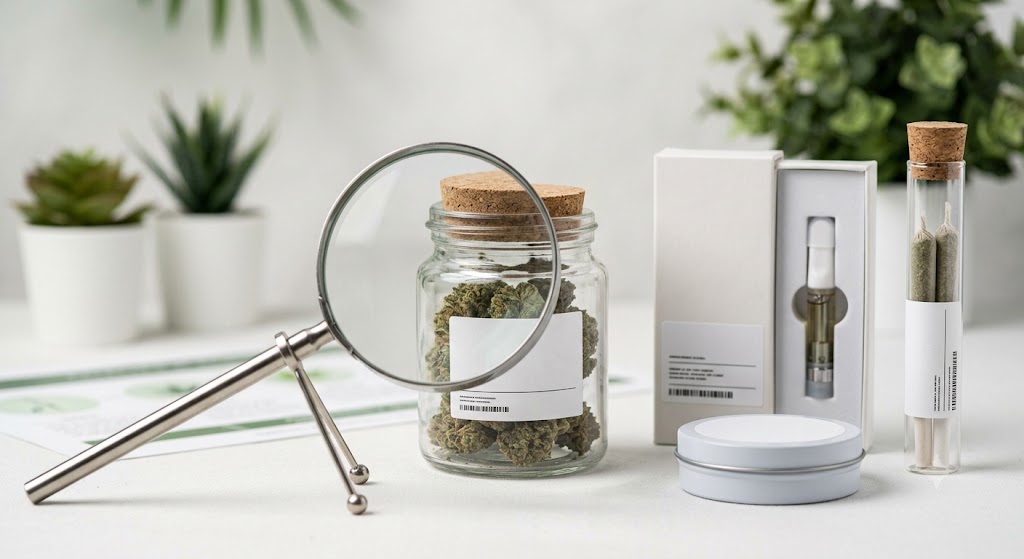
Flower labels often include strain name, brand, net weight, THC percentage, cannabinoid information, batch details, and package date. Some may include terpene information or additional product notes.
Flower label checklist
- Brand name
- Strain name
- Indica, sativa, or hybrid classification
- Net weight, such as 3.5g
- THC percentage
- CBD percentage when applicable
- Total cannabinoids
- Package date
- Batch or lot number
When comparing flower, do not rely only on THC. Browse the full flower menu and compare brands like Maven, CAM, Bosky, Pacific Stone, Dime Bag, Coastal Sun, Poet, and Tiny Fires.
How to Read a Pre-Roll Label
Pre-roll labels can be slightly different because they may include total package weight, number of pre-rolls, THC percentage, strain type, and whether the product is infused.
Pre-roll label checklist
- Single or multipack
- Total grams in the package
- Grams per pre-roll
- Standard or infused
- Brand name
- Strain name or product name
- Indica, sativa, or hybrid label
- THC percentage
- Package date
Infused pre-rolls can be stronger than standard flower pre-rolls. If you are new, ask your budtender before choosing an infused product.
Browse the pre-roll menu or compare brands like Jeeter, Presidential, Sluggers, King Roll, Pretty Dope, and Pacific Stone.
How to Read a Vape Label
Vape labels may include THC percentage, cannabinoid content, oil type, strain type, net volume or weight, brand, batch details, and hardware format. Some vape products require specific batteries or pod systems, while others are disposable.
Vape label checklist
- Brand name
- Cartridge, pod, or disposable format
- Amount of oil
- THC percentage
- CBD or other cannabinoids when applicable
- Strain type
- Oil or extract description
- Compatible hardware when needed
- Batch or testing information
Browse the vape category and compare brands like Stiiizy, Raw Garden, Rove, Microbar, and PlugPlay.
How to Read an Edible or Gummy Label
Edible labels are where serving size matters most. A package may look small but contain multiple servings. Beginners should pay close attention to THC per serving, total THC, number of pieces, and whether the product includes CBD or other cannabinoids.
Edible label checklist
- THC per serving
- Total THC per package
- Number of servings
- Pieces per package
- Serving size
- CBD or other cannabinoids
- Flavor
- Expiration or best-by date when available
- Ingredients and allergen information
For gummies, browse gummies from brands like Wyld, Camino, Froot, and Kanha. For broader options, browse edibles from brands like Dr. Norm’s and Lost Farm.
How to Read a Cannabis Drink Label
Cannabis drinks are edible-style products in beverage form. The most important detail is whether the container is one serving or multiple servings. Do not assume the full container is meant to be consumed at once.
Drink label checklist
- THC per serving
- Total THC per container
- Servings per container
- CBD or other cannabinoids
- Flavor
- Recommended serving size
- Expiration or best-by date when available
Browse the drink category or compare brands like St. Ides and Pabst Blue Ribbon.
How to Read a Wax or Concentrate Label
Wax and concentrates are usually better for experienced consumers. Labels may include THC percentage, total cannabinoids, extract type, strain, consistency, batch information, and package weight.
Concentrate label checklist
- Extract type
- THC percentage
- Total cannabinoids
- Net weight
- Strain or product name
- Brand
- Batch number
- Package date
- Storage recommendations when available
Browse the wax category and compare brands like Raw Garden, Cold Fire, Coldfire, and Punch Extracts.
How to Compare Two Cannabis Products by Label
If you are comparing two products, do not just pick the one with the highest THC. Use the full label to compare value and fit.
| Question | Label Detail to Compare | Why It Matters |
|---|---|---|
| Which is stronger? | THC per serving or THC percentage | Helps estimate potency |
| Which is better for beginners? | Serving size, product type, THC amount | Helps avoid overdoing it |
| Which is fresher? | Package date | Important for flower and pre-rolls |
| Which has better value? | Weight, serving count, price, deals | Helps compare cost per use |
| Which fits my goal? | Category, strain type, cannabinoids, terpenes | Helps match product to desired experience |
Before choosing, check current cannabis deals. A product on special may be the better value even if another product has a higher THC number.
Common Cannabis Label Mistakes
Confusing total THC with THC per serving
This is especially common with edibles and drinks. Always identify how much THC is in one serving, not just the full package.
Choosing only by THC percentage
THC matters, but quality, freshness, terpenes, brand, dose, and product type matter too.
Ignoring package date
Freshness can affect flower and pre-roll quality. Ask what is fresh or moving quickly.
Not checking whether a pre-roll is infused
Infused pre-rolls can be stronger than standard pre-rolls. Beginners should ask before buying.
Assuming indica, sativa, or hybrid is a guarantee
Those labels are useful, but they do not explain everything. Cannabinoids, terpenes, dose, and tolerance all matter.
Skipping serving instructions
Serving instructions are especially important for gummies, edibles, and drinks. Do not ignore them.
What to Ask Your Budtender About a Label
If you are not sure what a label means, ask. A budtender can help translate the label into a practical recommendation.
Helpful questions include:
- What does this THC number mean?
- Is this THC per serving or total THC?
- How many servings are in this edible?
- Is this pre-roll infused?
- Is this beginner-friendly?
- Is this flower fresh?
- What does this terpene profile suggest?
- Does this contain CBD?
- Is this better for relaxing, daytime, or balanced use?
- Is this product on deal today?
Best Brands to Compare by Label
Once you know how to read labels, you can compare brands more intelligently. Instead of only looking for familiar packaging, compare product type, potency, serving size, freshness, and category fit.
Flower brands
Compare flower labels from brands like Maven, CAM, Bosky, Pacific Stone, Dime Bag, Coastal Sun, Poet, and Tiny Fires.
Vape brands
Compare vape labels from Stiiizy, Raw Garden, Rove, Microbar, and PlugPlay.
Gummy and edible brands
Compare edible labels from Wyld, Camino, Froot, Kanha, Dr. Norm’s, and Lost Farm.
Pre-roll brands
Compare pre-roll labels from Jeeter, Presidential, Sluggers, King Roll, Pretty Dope, and Pacific Stone.
For a broader overview, browse the full brand directory or read our guide to the best cannabis brands in Long Beach.
How Cannabis Labels Help You Save Money
Labels can help you compare value more accurately. A cheaper product is not always the better value, and a more expensive product is not always the better experience. Use the label to compare what you are actually getting.
For example:
- Compare grams when buying flower.
- Compare number of pre-rolls in a pack.
- Compare THC per serving in gummies.
- Compare servings per drink.
- Compare package date for freshness.
- Compare deal pricing before choosing.
Before buying, check current cannabis deals and join ShowGrow Rewards to get more value from eligible purchases. If you recommend ShowGrow to friends, explore the Referral Program too.
Cannabis Label Reading Checklist
Use this checklist before buying any cannabis product.
- What product type is this?
- How much THC is in one serving or in the product?
- Does it contain CBD?
- How many servings are inside?
- What is the net weight?
- Is it indica, sativa, or hybrid?
- Is it standard or infused?
- What brand makes it?
- When was it packaged?
- Is it on deal today?
- Does it fit my experience level?
- Did I ask a budtender if I am unsure?
Frequently Asked Questions About Cannabis Labels
What is the most important thing to read on a cannabis label?
The most important detail depends on the product. For edibles and drinks, check THC per serving and serving size. For flower and pre-rolls, check THC percentage, weight, strain type, and package date. For vapes, check THC percentage, oil type, and hardware format.
What does THC mean on a cannabis label?
THC is the main intoxicating cannabinoid in cannabis. Labels may show THC as a percentage, milligrams per serving, or total milligrams depending on the product.
Is higher THC always better?
No. Higher THC does not automatically mean a better product. Freshness, flavor, terpenes, brand quality, product type, and your tolerance all matter.
What does CBD mean on a cannabis label?
CBD is a non-intoxicating cannabinoid. Some products include CBD alone or in combination with THC. CBD information may appear as a percentage, milligrams, or ratio.
What does serving size mean on an edible label?
Serving size tells you how much of the edible is intended to be consumed at once. This is critical for gummies, edibles, and drinks because one package may contain multiple servings.
What is the difference between total THC and THC per serving?
Total THC is the amount in the full package. THC per serving is the amount in one serving. Beginners should pay close attention to THC per serving.
What does infused mean on a pre-roll label?
Infused means the pre-roll contains cannabis flower plus added concentrate, oil, kief, hash, or another cannabis extract. Infused pre-rolls are often stronger than standard pre-rolls.
What does indica, sativa, or hybrid mean on a label?
These labels describe common strain categories. Indica is commonly associated with relaxing effects, sativa with uplifting effects, and hybrid with balanced or mixed effects. They are helpful starting points but not guarantees.
What does package date mean?
Package date tells you when the product was packaged. It can be useful for evaluating freshness, especially with flower and pre-rolls.
How do I compare two cannabis products?
Compare product type, THC, serving size, weight, brand, freshness, category, and price. Also check whether either product is included in current deals.
Can a budtender help me read a cannabis label?
Yes. If a label is confusing, ask a budtender to explain THC, serving size, CBD, strain type, infusion, or product format before you buy.
Where can I browse cannabis products by category?
You can browse flower, vapes, pre-rolls, gummies, edibles, drinks, wax, topicals, and deals.
Shop Smarter by Reading Cannabis Labels
Learning how to read a cannabis label helps you shop with more confidence. Instead of guessing based on packaging or choosing only by THC, you can compare products by serving size, potency, freshness, weight, strain type, cannabinoids, terpenes, and category.
Start by browsing the product category that fits your needs: flower, vapes, pre-rolls, gummies, edibles, drinks, wax, or current deals. You can also browse the full brand directory to compare trusted cannabis brands at ShowGrow Long Beach.
If you shop regularly, join ShowGrow Rewards and explore the Referral Program to get even more value from future visits.