
What Did California Proposition 215 Legalize?
Proposition 215 gave qualifying patients and their primary caregivers medical cannabis protections under California law in 1996. Adult-use legalization came through Proposition 64 in 2016.

From Brownie Mary’s kitchen to patient advocacy
California Proposition 215, the Compassionate Use Act, gave qualifying patients and their primary caregivers protections under state law for possessing or cultivating medical cannabis on a physician’s recommendation. Voters approved it in 1996. It did not legalize adult-use cannabis, which came through a separate vote in 2016.
Mary Jane “Brownie Mary” Rathbun baked cannabis brownies for people with AIDS and other serious illnesses. In San Francisco, her work became part of a movement that brought patients’ access to cannabis into public view.
The San Francisco Public Library’s Brownie Mary Collection preserves photographs, flyers and clippings documenting her advocacy. Her story is about the people seeking access and those who helped them, not proof that cannabis treats or cures AIDS.
How did patient advocacy reach the ballot?
AIDS-era organizing helped turn patient access into a statewide political campaign. San Francisco advocate Dennis Peron’s work grew from the crisis and his partner Jonathan West’s illness.
Peron’s San Francisco Cannabis Buyers Club made patient access visible. Rathbun, Peron and Southern California nurse and patient advocate Anna Boyce were among those who campaigned for Proposition 215.
What did Proposition 215 change in 1996?
Approved by voters on November 5, 1996, Proposition 215 was a medical access measure. Its protections covered qualifying patients and primary caregivers who possessed or cultivated marijuana for medical treatment on a physician’s recommendation.
It did not legalize adult-use cannabis or establish a complete retail licensing system.
When did California legalize adult-use cannabis?
Adult-use legalization came through Proposition 64, a separate vote two decades later, not automatically from Proposition 215. The path from patient advocacy to regulated adult-use sales was neither immediate nor inevitable.
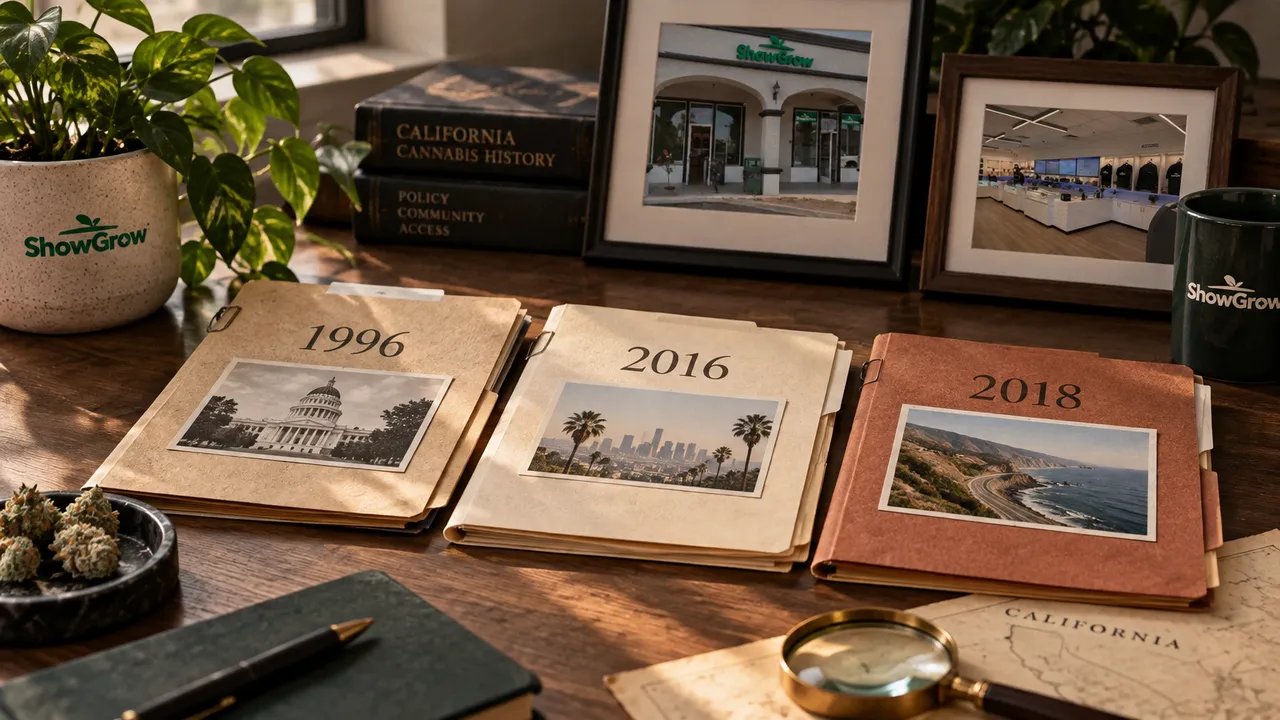
- November 5, 1996: California voters approved Proposition 215 and its medical cannabis protections.
- November 8–9, 2016: Voters approved Proposition 64, and specified personal use and cultivation became legal under California law for adults 21 and older on November 9.
- January 1, 2018: California’s state licensing framework for commercial adult-use cannabis began. Local permission still mattered.
How did the change reach Long Beach?
Long Beach followed its own local process. Voters approved Measure MM for medical cannabis businesses in 2016. The city approved its adult-use regulatory ordinance in July 2018 and began accepting adult-use business applications on August 13, 2018.
For the local retail timeline, read When Did Recreational Cannabis Sales Start in Long Beach? Today, ShowGrow Long Beach is at 3411 E Anaheim St. See the Long Beach store information for a visit, and check where cannabis consumption is legal in Long Beach.
Related guides
Sources
- Brownie Mary Collection, 1981–2001, San Francisco Public Library finding aid
- Brownie Mary’s Marijuana Cookbook, Museum of Sonoma County
- How San Francisco’s HIV/AIDS warriors paved the way for today’s cannabis gold rush
- Force Behind Proposition 215 Says His Push Began as ‘Legacy of Love’
- 1996 Voter Information Guide: Proposition 215
- Proposition 64: The Adult Use of Marijuana Act
- Review of Cannabis-Related Tax Measures in California
- Cannabis Equity Retail Storefront Feasibility Analysis, City of Long Beach
- Important Deadlines for Cannabis Business Applicants, City of Long Beach