
Long Beach Cannabis Culture, From Activism to Legal Stores
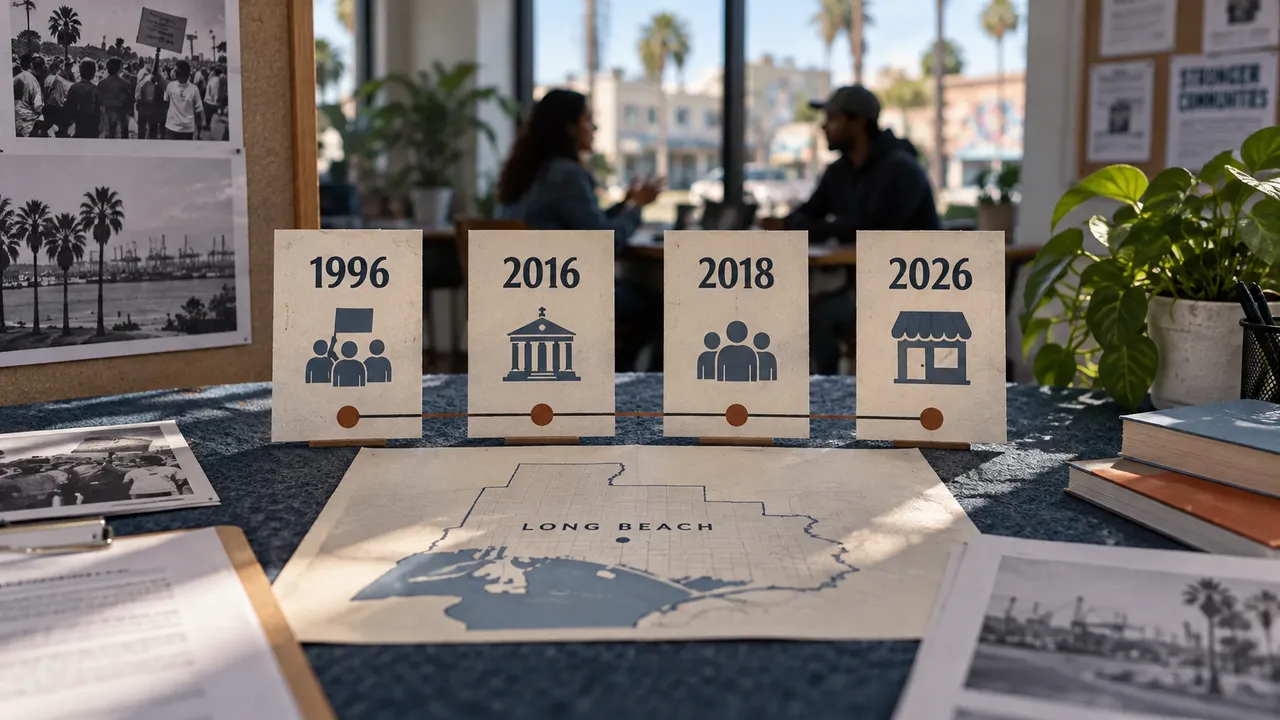
Long Beach approved a cannabis storefront framework in 2016, created an equity program in 2018, and announced its first equity-program dispensary in 2026. The timeline marks progress in policy, but does not establish that ownership barriers are gone.
Why did Long Beach’s first equity dispensary take years?
Long Beach’s first dispensary licensed through its cannabis equity program opened in 2026, years after the city began regulating cannabis businesses. That gap traces a local shift from allowing storefronts to trying to widen who can enter the regulated market.
What changed with Measure MM in 2016?
The policy timeline begins before Long Beach’s storefront rules. California voters approved Proposition 215 in 1996, establishing a statewide framework for medical cannabis. Two decades later, Long Beach voters approved Measure MM on November 8, 2016. The measure repealed the city’s ban and created a framework for medical cannabis businesses.
The city’s 2016 decision was a turning point for regulated storefronts, but it did not itself guarantee access to business ownership for people affected by cannabis enforcement. Legal permission and practical opportunity are different questions.
What was the equity program designed to do?
On July 10, 2018, the City Council approved an adult-use ordinance and the Cannabis Social Equity Program. The city describes the program’s purpose as addressing the long-term effects of cannabis enforcement on low-income communities and communities of color.
The city lists tools including licensing priority, expedited review, fee waivers or deferrals, technical assistance, and grants. These are policy supports, not evidence by themselves that a business can overcome every barrier to entry or remain financially sustainable.
What did the first equity-program storefront change?
On July 15, 2026, the city announced that Off the Charts, at 6037 Atlantic Ave. in North Long Beach, was the first dispensary licensed under the equity program. The city said the business had received program grant support. This marks a specific licensing milestone, not proof that the broader challenges of ownership have been resolved.
The announcement invites a practical next question: who can afford to enter and sustain the regulated market? Answering it would require more reporting with program participants, city staff, neighborhood residents, and cannabis advocates. The available public milestones establish the policy timeline, but they do not supply those perspectives.
What should readers look for next?
Long Beach moved from a voter-approved storefront framework in 2016 to a city equity program in 2018, then to its first equity-program dispensary in 2026. The sequence shows how formal regulation can precede efforts to broaden participation.
ShowGrow is a recreational cannabis dispensary at 3411 E Anaheim St. in Long Beach. Its supplied business information does not identify it as part of the city’s equity program. For a separate local guide to rules about use, see [where cannabis can legally be consumed in Long Beach](/learn/where-can-you-consume-cannabis-in-long-beach/).
Explore the store
Related guides
Sources
- California Secretary of State: Proposition 215, official title and summary
- City of Long Beach: Approved Ballot Measures, Measure MM
- City of Long Beach: Cannabis equity direct grants policies and procedures
- City of Long Beach: Cannabis rules and regulations
- City of Long Beach: First cannabis equity dispensary announcement, July 15, 2026
- Inside LB News: Long Beach opens its first cannabis equity dispensary
- California Department of Cannabis Control: Off The Charts premises listing